
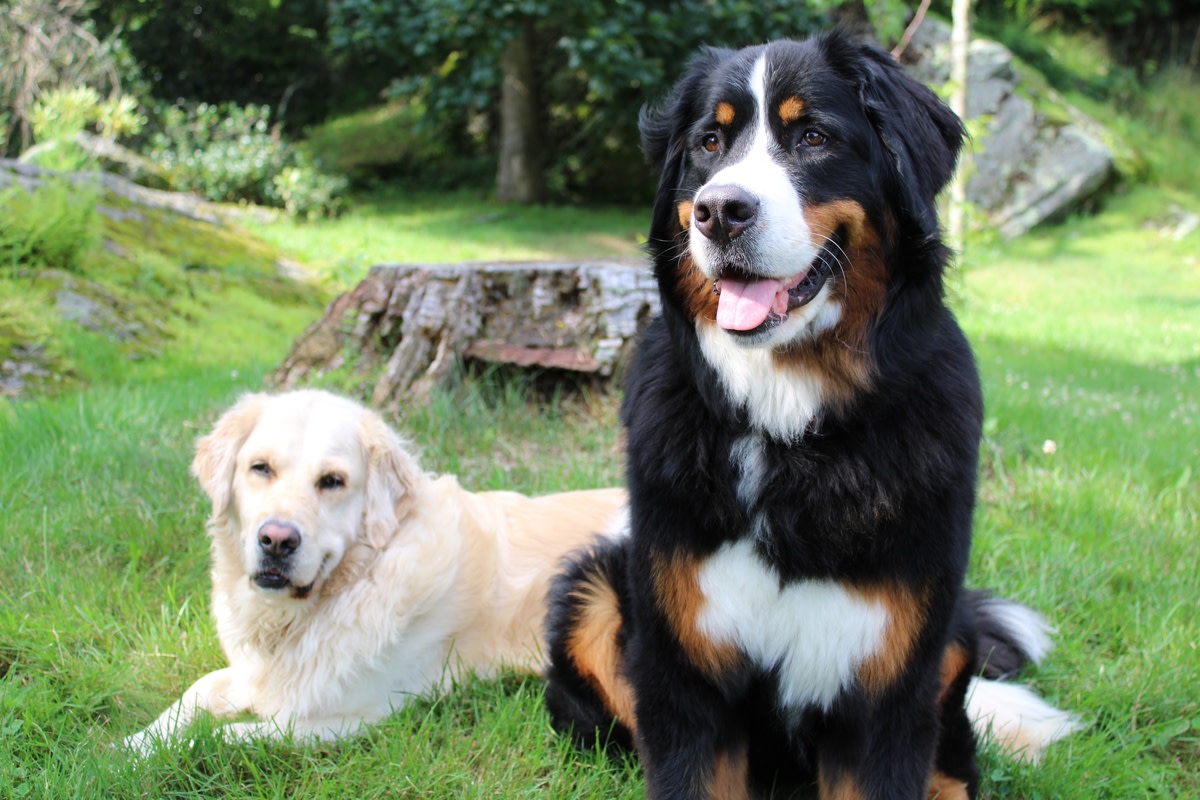
A Bernese Mountain Dog Golden Retriever mix is often called a Golden Mountain Dog. This cross combines two large, people-oriented breeds known for their affectionate nature and family companionship. Many have a friendly, gentle temperament, but no mixed-breed puppy comes with a guaranteed adult size, coat, personality, or health profile. Genetics, early socialization, training, and the care provided by the owner all matter.
What Is a Golden Mountain Dog?
The Golden Mountain Dog is a cross between a Bernese Mountain Dog and a Golden Retriever. Some puppies inherit more of the Bernese parent’s black, white, and rust markings, while others have a lighter golden coat. Coat length, shedding, facial shape, and body build can vary even among puppies from the same litter.
Temperament and Personality
Both parent breeds are commonly described as sociable and affectionate. A mix may enjoy being close to family members, participating in daily activities, and learning through positive reinforcement. Many are friendly with visitors when properly socialized, but individual temperament varies.
Because these are large dogs, early training is important. Teach calm greetings, loose-leash walking, recall, settling on a mat, and polite behavior around children and other animals. Supervise interactions with young children and provide the dog with a quiet place to rest.
Size and Appearance
Both parent breeds are substantial dogs, so owners should be prepared for a large companion. Adult size depends on the parents’ measurements and inherited traits. Ask to meet both parents when possible and review their health records. A breeder’s estimate is not a guarantee of the adult dog’s weight or height.
Coat, Shedding and Grooming
The mix often has a medium-to-long double coat, but coat density and texture can vary. Expect regular shedding and potentially heavier seasonal shedding. Brush several times a week, increasing frequency when the coat is shedding. Pay attention to the feathering behind the ears, under the legs, tail, and other areas that can mat.
Check ears, trim nails as needed, brush teeth regularly, and bathe when appropriate. Avoid shaving a double coat unless a veterinarian recommends it for a medical reason; coat care should preserve skin health and natural protection.
Exercise and Mental Enrichment
Most Golden Mountain Dogs benefit from daily walks, sniffing opportunities, play, and training games. Build exercise gradually, especially while the dog is growing. Avoid forcing a young large-breed puppy into strenuous repetitive exercise or high-impact jumping. Adult activity needs depend on age, health, body condition, and individual drive.
Food puzzles, scent games, short obedience sessions, and calm social outings provide mental stimulation. Provide shade and water in warm weather, and watch for signs of overheating.
Training and Socialization
Use reward-based training with clear rules and consistent routines. Large dogs can accidentally knock people over, so reinforce four paws on the floor and teach them to walk without pulling. Introduce different surfaces, sounds, people, and environments gradually and positively. Avoid harsh corrections, which can damage trust and make behavior problems worse.
Health Considerations
Both parent breeds can be predisposed to certain inherited and orthopedic conditions. Potential issues to discuss with a veterinarian and responsible breeder include hip and elbow dysplasia, some eye conditions, heart disease, and cancers seen in either parent breed. A mixed-breed dog may inherit risks from either side, and crossbreeding does not automatically eliminate genetic disease.
Ask for documented health screening of the parent dogs, including relevant hip, elbow, eye, and cardiac evaluations recommended by breed health organizations. Maintain a healthy body condition, schedule routine veterinary checks, and seek advice early if you notice persistent limping, exercise intolerance, unusual lumps, or changes in appetite and behavior.
Feeding a Large-Breed Mix
Choose a complete and balanced food appropriate for the dog’s life stage and size, and discuss large-breed puppy nutrition with your veterinarian. Measure portions rather than leaving food available all day. Treats should be included in the daily calorie plan, and fresh water should always be available.
Is This Mix Right for Your Home?
A Golden Mountain Dog may suit households that can provide companionship, grooming, training, space to move, and the costs of caring for a large dog. It may be less suitable for someone who is away for long periods, cannot manage shedding, or wants a dog that needs very little exercise. Consider adoption and reputable breed-specific rescue groups as well as responsible breeders.
Frequently Asked Questions
Are Golden Mountain Dogs good family pets?
Many are affectionate and social, but suitability depends on the individual dog’s temperament, training, supervision, and the household’s ability to meet its needs.
Do they shed a lot?
Shedding is commonly expected because both parent breeds have substantial coats. The amount varies by dog and season.
Are they easy to train?
They can be responsive to positive reinforcement, but consistency and early training are essential for a large, strong dog.
Conclusion
The Bernese Mountain Dog and Golden Retriever mix can make a loving, active companion for a prepared household. Plan for grooming, daily engagement, early socialization, and regular veterinary care. Evaluate the puppy as an individual and ask for health documentation rather than relying only on the appeal of the crossbreed name.

Lily Rose is a passionate food blogger with years of experience exploring menus, flavors, and dining trends, delivering clear, reliable insights that help readers discover great food and make confident choices.